Estimated reading time: 5 minutes
I still remember walking into Toys “R” Us as a kid and being overwhelmed by the aisles. Towering shelves packed with Lego sets, Game Boys locked in glass cases, that slightly chaotic energy of kids tugging at their parents’ arms. It felt infinite, like the Disney World of toys.
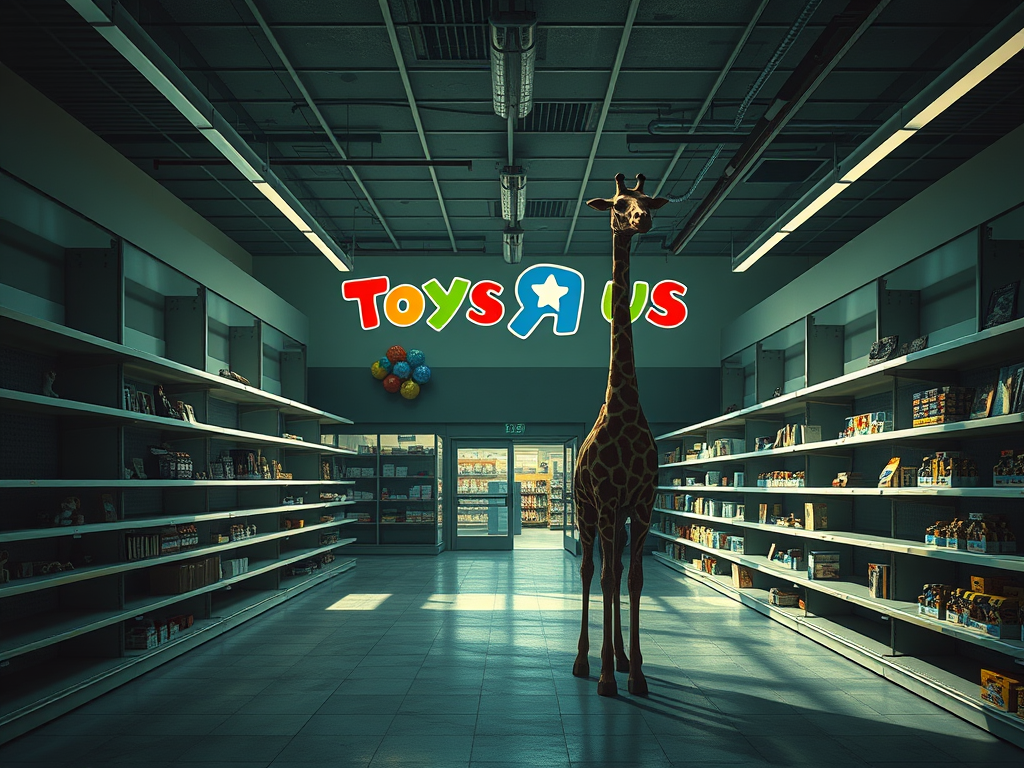
So when Toys “R” Us shut down in 2018, it wasn’t just the end of a store. It was the end of a cultural landmark. Parents snapped goodbye photos with Geoffrey the Giraffe, kids clutched clearance-sale stuffed animals, and 33,000 employees lost their jobs overnight.
Here’s the thing: Toys “R” Us didn’t collapse because kids stopped wanting toys. Or because Amazon magically stole their market overnight. It collapsed because private equity firms—Bain Capital, KKR, and Vornado Realty—bought it in a $7.5 billion deal, strapped it with $5 billion in debt, and bled it dry.
And Toys “R” Us isn’t alone. Bed Bath & Beyond, once the wedding-registry powerhouse, is gone. Joann Fabrics, the community hub for crafters, is circling bankruptcy. What all these stories have in common isn’t changing consumer taste—it’s private equity.
Why Big-Box Retail Looked Like a Gold Mine
To private equity firms, these chains checked every box.
- Steady cash flow.
People keep buying toys, towels, and fabric—even in recessions. That means reliable money coming in every month. - Brand recognition.
These were household names with decades of loyalty. A recognizable logo is priceless. - Real estate.
Big-box chains often owned their stores, sitting on billions in property value. That could be sold or spun off for a quick payday. - Easy cuts.
Tens of thousands of workers, bloated supply chains, corporate offices—PE firms saw “efficiency opportunities” everywhere.
On paper, it looked like free money. Buy the brand, load it with debt, cut costs, and cash out before anyone notices the walls crumbling.
How Private Equity Broke the Business
Here’s the playbook:
1. The Debt Bomb
When Bain and KKR bought Toys “R” Us, they didn’t actually spend much of their own cash. They borrowed. The company itself got stuck with nearly $5 billion in debt. Overnight, Toys “R” Us had to cough up $400 million a year just to pay interest. That’s money that should have gone into making stores better, building e-commerce, or dropping prices to compete with Target.
Bed Bath & Beyond did something similar, borrowing billions to buy back its own stock instead of fixing the stores. Joann Fabrics? Same story—nearly $1 billion in debt after Leonard Green & Partners bought it in 2011.
2. Stripping Out Value
While these companies were struggling, their private equity owners still got paid. Toys “R” Us shelled out millions in “management fees” to Bain and KKR. Real estate got spun off, meaning stores that once owned their land now had to pay rent.
3. Starving the Future
Debt payments drained resources that should have gone into innovation. While Walmart and Target rolled out slick online ordering, Toys “R” Us’s website felt stuck in the 1990s. Bed Bath & Beyond cut staff and stocked shelves with junky private-label goods just as customers were demanding more choice. Joann couldn’t keep up with younger crafters who flocked to Etsy or Amazon for supplies.
By the time bankruptcy arrived, the damage was irreversible.
The Fallout
Workers Got Wrecked
Toys “R” Us: 33,000 people lost their jobs. No severance. Nothing.
Bed Bath & Beyond: another 29,000 jobs gone in 2023.
Joann Fabrics: 20,000 employees now bracing for layoffs as bankruptcy looms.
These weren’t just numbers. They were retail workers—cashiers, managers, stockroom clerks—who gave years of service and walked away with nothing while Wall Street collected its fees.
Communities Lost Anchors
When big-box stores go dark, malls and shopping centers collapse around them. The empty shells of Toys “R” Us stores still dot American suburbs. For small towns, losing a Bed Bath & Beyond wasn’t just about fewer towels—it meant fewer local jobs and less tax revenue.
Consumers Were Left Behind
We lost more than stores—we lost rituals. Toys “R” Us was birthday parties and Christmas mornings. Bed Bath & Beyond was scanning your first wedding registry. Joann’s was moms teaching kids to sew or craft. That kind of cultural loss doesn’t show up on a balance sheet.
Case Studies
Toys “R” Us: A Debt-Driven Death
- Acquired by: Bain, KKR, Vornado (2005).
- Debt: $5 billion.
- Outcome: Couldn’t invest in e-commerce, liquidated in 2018.
- Fallout: 33,000 jobs gone, no severance. A beloved brand destroyed.
Bed Bath & Beyond: Buybacks Over Basics
- Acquired by: Activist investors and consultants with PE ties shaped strategy.
- Debt: Billions used for stock buybacks.
- Outcome: Bankruptcy in 2023, 360 stores shuttered.
- Fallout: 29,000 jobs lost. Overstock.com bought the brand name—but the stores are gone.
Joann Fabrics: Coming Apart at the Seams
- Acquired by: Leonard Green & Partners (2011).
- Debt: Nearly $1 billion.
- Outcome: Filed Chapter 11 in 2024.
- Fallout: 850 stores and 20,000 workers face uncertainty.
Why Does This Matter?
This isn’t just about bad business. It’s about a system that turns companies into ATMs for financiers while hollowing them out from the inside.
Toys “R” Us didn’t die because kids stopped loving toys. Bed Bath & Beyond didn’t fail because people stopped needing sheets. Joann isn’t collapsing because no one sews anymore.
They fell because Wall Street engineered it that way.
Conclusion: Who Profits, Who Pays?
Every time a big-box brand collapses, it’s worth asking: who actually killed it?
For workers, it means lost jobs. For communities, empty storefronts. For consumers, lost traditions. For private equity? It means management fees, asset sales, and cash in the bank—long before the lights go out.
The next time you see a headline about a beloved chain shutting down, remember: it’s not always changing tastes or Amazon to blame. Sometimes, it’s financiers who profited first and left everyone else holding the bag.







Leave a Reply