Estimated reading time: 7 minutes
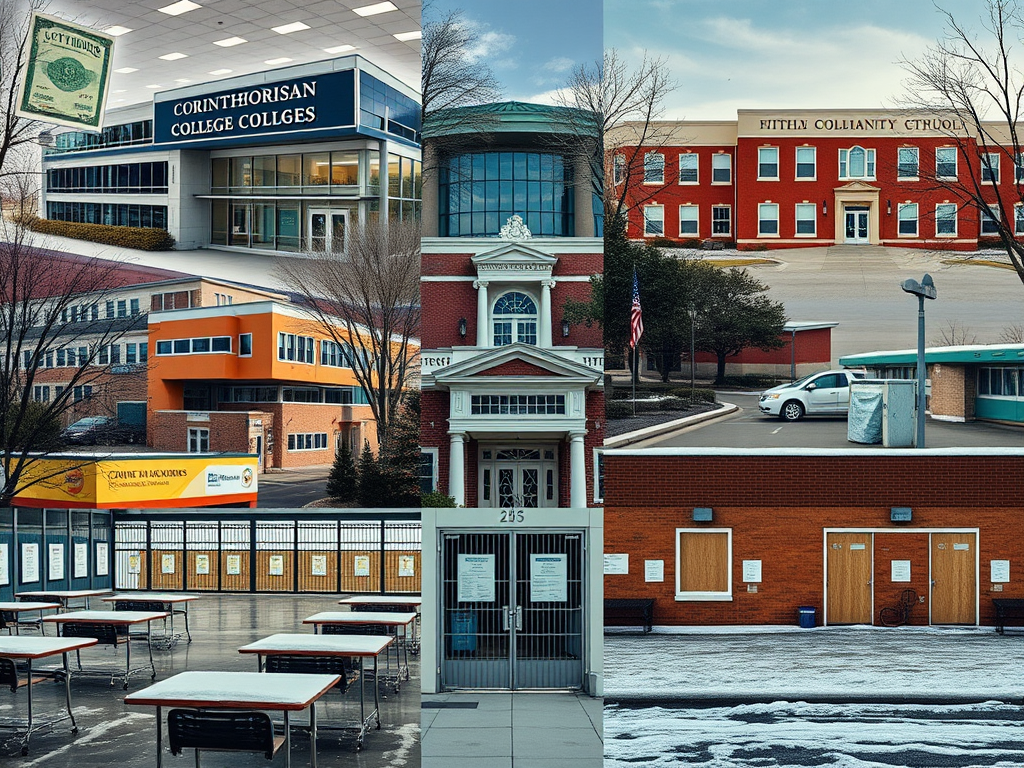
One cold December morning in 2018, students arrived at Education Corporation of America schools to find everything shut tight. There’d been zero heads-up. Not even a basic plan for what came next. Teachers gone, staff vanished – only a note on the door said they’d closed right then and there. Many were just days from completing their programs. Others are halfway through classes. Every single one got hit out of nowhere.
This didn’t happen by chance – it followed straight from a setup where federal loan access, hard-sell tactics, and investors chasing big profits shaped schools more like startups than places meant to teach with private equity involvement.
For-profit schools once had more than 2.4 million learners at their peak. Now, major institutions – like Corinthian Colleges, ITT Tech, Argosy University, or The Art Institutes – shut down quickly, dragging down their accreditations and piling up huge debts, while former attendees struggle to move forward in their careers due to private equity influence.
Why For-Profit Colleges Appeal to Private Equity
On the surface, for-profit schools appear to be cash cows to their backers. They run on steady income backed by public funding, while learners continue to show up eager for a chance. That’s what pulled in big money from private equity firms – reliable returns mixed with endless need.
1. Federal Student Aid = Guaranteed Cash Flow
For-profit schools may receive nearly all their funding directly from government aid, such as student loans or Pell Grants. So, instead of chasing students who pay out of pocket, these places rely on cash handed over by D.C. – basically, tuition wired right into their bank.
A steady paycheck during tough times sounds perfect to money-hungry private equity firms.
2. Low Upfront Costs, High Tuition Pricing
Some career schools sit in shopping centers, business areas, or leased spaces. Instead of big grounds, they skip huge facilities, fancy labs, or permanent teaching staff.
Yet they usually cost more compared to state schools. A small expense with a considerable selling number means more profit potential, attracting those focused on private equity outcomes.
3. Rolling Admissions + High-Pressure Recruiting
Private equity-run schools fine-tuned a sales-heavy way to bring in students. Staff were coached to sign people up quickly – without ensuring they understood the risks of debt or career opportunities.
More pupils means extra government funding, which boosts income, pushing up the value for those interested in equity.
4. Scalability and “Roll-Up” Potential
A top pick for private investors: grab one campus, snap up several others, merge the back-end work, slash expenses – then sell it as a “countrywide learning network.”
Imagine Corinthian Colleges: started as a tiny job-training outfit, then ballooned into a giant network with more than 100 locations – all thanks to takeovers and low-cost loans heavily influenced by private equity.
5. Short-Term Exit Strategy
When sign-ups reach maximum levels and income increases, these companies may then sell off their stakes within the equity markets.
- Sell shares of the business on the stock market
- Sell it to a different company
- Burden it with loans while pulling out profits
Meanwhile, quality declines, accreditation cracks form…and students are left holding the bag.
How Private Equity Reshaped the For-Profit College Model
When PE firms bought education chains, the shift was immediate:
Aggressive Enrollment Targets
Recruiters got bonuses for enrolling just about anybody – ex-soldiers, moms raising kids alone, people on tight budgets, newcomers to the country. Many of them didn’t know much about loans, and some had heard false promises about landing jobs.
Inside papers from ITT Tech showed staff learned to highlight struggles in a learner’s present situation – after that, pitch the course as the fix.
Cuts to Instruction & Student Services
To maximize margins, PE owners cut:
- faculty hours
- career services
- tutoring
- mental health support
- library access
- job placement programs
Yet tuition continued rising due to the focus on private equity returns.
Accreditation Workarounds
Some schools chose the easiest accreditors, as meeting their standards required less effort. Meanwhile, a few fell short completely – yet kept those setbacks quiet from learners till there was no time left.
Marketing Spending Over Education Spending
At some chains, 25% of revenue was spent on advertising, compared to 2–3% at public universities.
As the saying goes:
More dollars went into billboards than into classrooms. This shift in spending priorities highlights the impact of private equity.
A Bankruptcy Strategy
As legal troubles piled up or student numbers fell, several schools shut fast – stranding learners halfway through their studies.
Measured Consequences: Debt,
Dropouts, and Broken Promises
The fallout from the for-profit college boom is massive and well-documented.
1. High Student Debt
Young people in private career schools make up only one-tenth of those signed up for higher education…
…yet around four out of ten student loan failures.
Jobs paid poorly after training – so paying back loans felt impossible.
2. Higher Tuition Than Public Colleges
A report from the Department of Education states that obtaining a 2-year certificate at a private career school often costs nearly five times as much as it would at a local community college, so prices really add up quickly.
3. Low Completion Rates
Some schools saw less than 30% of learners finish their studies.
4. Accreditation Failures
If a school loses its official approval:
- Credits become worthless
- Some learners can no longer get government help
- Diplomas aren’t seen as valuable by bosses anymore
5. Taxpayers Eat the Losses
If cheated borrowers apply for debt relief through Borrower Defense, the price tag is ultimately borne by everyday taxpayers in the form of vast amounts of money.
Case Study: The Art Institutes (AI)
If one tale sums up the whole mess, it’s how The Art Institutes collapsed – driven by bad choices, fading trust, yet held together at first by hope. Each year brought bigger problems – not just financial issues, but a lost sense of purpose, slowly replaced by doubt instead of direction.
These days seen as shaky, AI was acquired in 2008 by Goldman Sachs Capital Partners via EDMC, its overseeing corporation. Their game plan? Go big fast – pull in more students, rake in cash, all part of a standard investor playbook.
Between 2001 and 2011, the number of students increased from 24,000 to over 150,000. Yet standards dropped hard. Learners started voicing concerns:
- overstated job placement rates
- credits that didn’t transfer
- nonexistent career support
- soaring tuition (up to $90,000 for a design degree)
The Department of Justice later blamed EDMC for shady hiring tactics. Due to government probes, fewer students signing up, as well as legal battles, the company fell apart.
In 2023, the last Art Institutes shut down for good, effectively ending the entire network. Many learners became stuck with credits that wouldn’t transfer, along with massive debt.
The Biden team signed off on $11 billion to wipe out loans for EDMC learners – this marks one of the biggest government moves tied to school debt ever. While not every case gets this kind of relief, this decision stands out due to its size and reach across former students.
Why This Matters
This tale isn’t just about “failing” schools. Instead, it reveals how financial incentives can distort the motives of groups that impact everyday lives.
1. Vulnerable populations are targeted.
Low-income learners, vets, busy moms – each drawn in fast since they’re eligible for government help.
2. The promise of education becomes a financial product.
Degrees turn into cash pipelines. Pupils are treated like prospect lists. Education takes a backseat when counting sign-ups matters more.
3. Taxpayers pay twice.
Firstly, through government funding sent directly to educational institutions.
Still, debt can be eliminated if scams run by shady schools are exposed.
4. Economic mobility is undermined.
Rather than helping learners start fresh careers, lots of profit-driven courses left them stuck owing money.
5. The cycle is not over.
Even though a few networks shut down, investors are now jumping into fresh learning scenes – using cash to back startups in places no one has tried before
- online bootcamps
- certificate programs
- short-term “microcredentials”
- coding schools
The danger remains unchanged: where making money comes first, learning gets pushed aside.







Leave a Reply